
No products in the cart.
Clothing Labels
Can Tagless Heat Transfer Labels Replace Sewn-In Labels? (The #1 Mistake to Avoid)
12
Mar
Mar
Can tagless heat transfer labels replace traditional sewn-in labels? In many cases, yes — but only if they are designed correctly. In fact, many brands switch to tagless labels expecting a cleaner look — only to end up with labels that are harder to read than the sewn-in tags they replaced.
Tagless heat transfer labels have become one of the most popular ways for clothing brands to label garments. Instead of sewing in a woven or printed label, the design is heat-pressed directly into the fabric, creating a clean, comfortable finish.
However, many clothing designers make one critical mistake when creating tagless heat transfer labels — and it can make the label difficult or even impossible to read once applied.
Can Tagless Heat Transfer Labels Replace Sewn-In Labels?
Yes, tagless heat transfer labels can replace sewn-in labels in many cases. They offer a cleaner look and improved comfort, but only when designed with proper sizing, font choice, and contrast. Poorly designed tagless labels can fade, blur, or become unreadable after repeated washing, which is the most common mistake clothing brands make.
Why Tagless Heat Transfer Labels Are Popular for Clothing Brands
Tagless heat transfer labels are widely used in modern apparel because they offer several advantages over traditional labels.
Some of the biggest benefits include:
• No itchy tags inside garments
• Clean, professional branding
• Durable designs that last through washing
• Easy application using a heat press
• Flexibility in design and placement
Because these labels are applied directly to the fabric, they create a smooth finish that customers appreciate — especially in athletic wear, children’s clothing, and casual apparel.
Many brands combine tagless heat transfers with other labeling elements such as woven brand labels or printed care labels to create a complete garment identification system.
Design Tip #1: Larger Labels Are Often Better
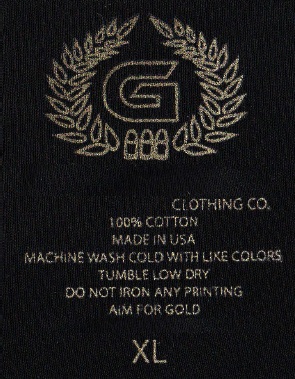
When designing tagless heat transfer labels, one common mistake is trying to fit too much information into a very small area.
If your design includes:
logo
size
fiber content
care instructions
website
slogan
then the label must be large enough for the information to remain readable.
Trying to squeeze too much information into a small design will result in text that becomes difficult to read once the label is applied.
Design Tip #2: Keep the Design Simple
In many cases, less information leads to a better looking tagless heat transfer label.
Some brands choose to include only their logo in the heat transfer and place all other information on a separate printed or woven label.
This approach can create a cleaner garment interior while still maintaining branding.

Design Tip #3: Use Bold, Readable Fonts
Fonts matter more than many designers realize when creating tagless heat transfer labels.
The best designs typically use:
bold fonts
simple typography
high contrast
minimal decorative elements
These features help maintain clarity after the label is pressed into the garment.
The #1 Mistake: Small Ornate Fonts
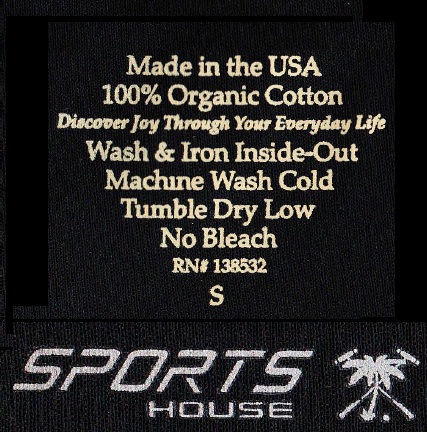
The most common mistake when designing tagless heat transfer labels is using fonts that are too small or too decorative.
When heat transfers are applied to fabric, heat and pressure slightly flatten the design into the garment fibers. If the lettering is too thin or detailed, the characters can blur together and become difficult to read.
This can make important information — such as care instructions or sizing — nearly impossible for customers to see.
(Image: Small Font Example)
For best results:
avoid script fonts
avoid tiny lettering
avoid overly decorative designs
prioritize readability
A simple, bold design will almost always produce the best result.
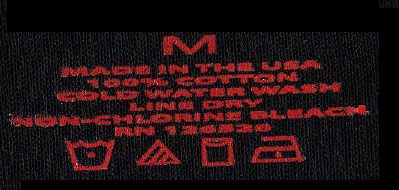
Tagless heat transfer labels are an excellent option for modern apparel brands looking to create comfortable, professional garment labeling.
By keeping designs simple, using readable fonts, and allowing enough space for information, designers can avoid the most common mistakes and produce labels that look great and last through repeated washing.
A well-designed tagless label not only improves garment comfort — it also strengthens brand recognition.
Watch our video to learn about our different types of heat tranfers.
👉 Explore custom heat transfer labels here
Or visit Rapidtags to learn more about custom clothing labels