
No products in the cart.
Blog
Types of Woven Labels: Why Not All Woven Clothing Labels Are Created Equal
16
Mar
Mar
If you run a clothing brand, you already know that the smallest details can have a big impact on how customers perceive your products. Fabric, stitching, packaging, and finishing touches all contribute to the overall quality of a garment. One detail that is often overlooked—but incredibly important—is the clothing label. Many designers choose custom woven labels for clothing brands because they create a professional look and reinforce brand identity. While woven labels are widely used, there are several types of woven labels, and understanding the differences can help clothing brands choose the best option for their garments.
Woven labels serve as the identity of a garment. They communicate your brand name, reinforce your product quality, and help customers recognize your brand long after the purchase.
However, many designers assume that all woven labels are the same. In reality, there are several types of custom woven labels, and the material used can significantly affect the look, feel, durability, and level of detail that can be achieved.
Understanding the different types of woven labels can help clothing brands choose the best option for their products and avoid costly mistakes when ordering custom labels.
What Are Woven Labels?
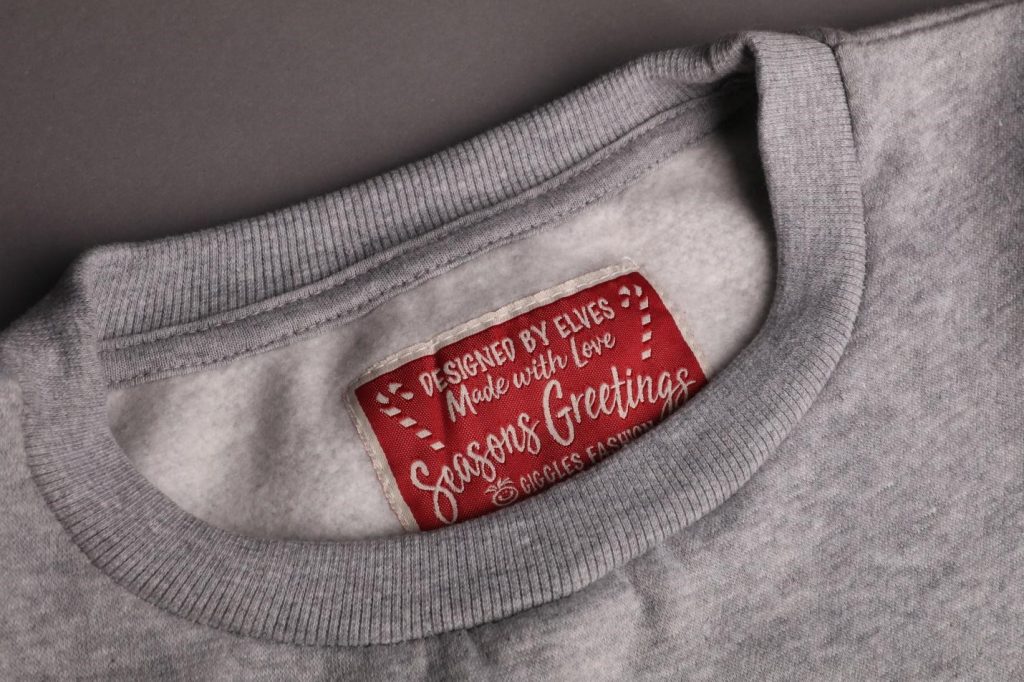
Woven labels are clothing labels created by weaving threads together on specialized looms to form text, logos, and designs. Instead of printing ink onto fabric, the design itself is woven directly into the label using colored yarns. Clothing labels are also important for regulatory reasons, since apparel sold in the United States must follow federal labeling guidelines for fiber content, country of origin, and care instructions outlined by the Federal Trade Commission’s textile labeling requirements.
This process produces a label that is:
extremely durable
resistant to fading
professional in appearance
capable of lasting the life of the garment
Because of their durability and high-end appearance, woven labels are widely used by fashion brands, apparel manufacturers, and clothing designers.
There are several types of woven labels, each made from different materials or thread densities that affect how the final label looks and feels.

Damask Woven Labels
Damask labels are the most popular and widely used woven labels in the apparel industry today.
These labels are typically made using polyester threads that are woven together at a high density, allowing for fine detail and smooth texture. Damask labels are known for their soft feel and ability to reproduce intricate logos, small text, and detailed artwork. High-density damask weaving allows extremely detailed logos and text to be reproduced on labels, which is why it has become the industry standard for most apparel brands according to resources within the modern textile manufacturing industry.
Most modern clothing brands choose damask labels because they provide the best balance between durability, comfort, and design flexibility.
Damask labels are typically produced in two thread densities.
100 Denier Damask
100 denier damask labels are woven using thicker threads and are commonly used for standard clothing labels. They provide excellent durability and clear text while maintaining a soft feel.
These labels work well for:
brand logos
sizing labels
neck labels
general apparel branding
50 Denier Damask
50 denier damask labels use finer threads, allowing for extremely detailed weaving. This type of woven label is often used when brands need very small lettering or intricate logo details.
Because the threads are finer, the finished label tends to feel even softer and smoother against the skin.
Many premium clothing brands choose 50 denier damask labels when they want the highest level of detail possible.
Taffeta Woven Labels
Taffeta labels are one of the more economical types of woven labels and are often used when cost is a primary consideration.
These labels use thicker threads and a simpler weave, which results in a slightly stiffer texture compared to damask labels. Because of this structure, taffeta labels are extremely durable but may not feel as soft against the skin.
For that reason, taffeta labels are commonly used for:
care and content labels
side seam labels
outer accessories like bags and hats
While taffeta labels cannot reproduce fine detail as well as damask labels, they are still a practical and reliable option for many applications.
Satin Woven Labels
Satin labels have a distinctive smooth and shiny surface that gives them a premium, elegant appearance. This type of woven label is often used when brands want to create a more luxurious or vintage aesthetic.
Satin labels feel very soft against the skin, making them suitable for garments where comfort is especially important.
However, satin labels are not ideal for extremely detailed designs. Because of the way satin is woven, very small lettering or complex artwork may not reproduce as clearly as it would on a damask label.
Despite that limitation, satin labels remain a popular option for brands looking for a polished, upscale look. Satin labels are commonly used in garments where comfort and appearance are important, and many apparel manufacturers choose satin for its smooth surface and soft texture as described in various textile material guides.
Cotton Labels
Cotton labels offer a more natural and organic appearance compared to synthetic woven labels. They are often used by brands that emphasize sustainability, eco-friendly materials, or handmade aesthetics.
Cotton labels are typically printed rather than woven, although woven cotton labels do exist in some applications.
Because cotton fibers are more loosely woven, they may not be suitable for designs that require very small lettering or intricate details. However, they can work beautifully for minimalist designs, heritage brands, or products that aim for a natural look.
Cotton labels are frequently used by:
sustainable clothing brands
artisan apparel companies
handmade goods producers
How Clothing Brands Choose the Right Woven Label
When selecting among the different types of woven labels, clothing designers usually consider several factors:
Design complexity
Detailed logos and small text typically require high-density damask labels.
Comfort
Labels worn directly against the skin should be soft and smooth.
Durability
Labels need to withstand repeated washing and wear.
Brand image
Luxury brands often choose higher-density woven labels to reinforce quality.
Cost considerations
Different materials and weaving densities can affect pricing.
Choosing the right woven label ensures that your garments maintain a professional appearance and deliver a consistent brand experience. Some brands also choose to use tagless heat transfer clothing labels for certain garments where comfort is a priority, especially in athletic wear or lightweight apparel.
Why Label Quality Matters for Clothing Brands
Customers often judge the quality of a garment by its finishing details. A well-designed label communicates professionalism and attention to detail, while a poorly made label can have the opposite effect.
Even though labels are small, they are one of the few permanent branding elements that remain attached to a garment for its entire life.
That is why choosing the right types of woven labels can make a significant difference in how customers perceive your brand.
Do You Need Help Choosing the Right Woven Label?
At Rapid Tags, we help clothing designers choose the best woven labels for their products based on design, fabric type, and branding goals.
If you’re unsure which woven label material will work best for your clothing line, call or email us and we’ll be happy to guide you through the options or send samples so you can compare them yourself.