
No products in the cart.
Blog
How to Design Woven Clothing Labels for Your Brand

05
Mar
Mar
A woven clothing label may be small, but it plays a major role in how a brand is perceived. From luxury fashion houses to independent clothing startups, woven labels act as a subtle signature that communicates quality, identity, and attention to detail. Understanding the fundamentals of woven label design helps ensure your label translates clearly when produced with thread.
For apparel designers, woven label design involves more than simply placing a logo onto fabric. Because woven labels are created using thread instead of ink, they follow a unique set of design principles. Certain elements translate beautifully into woven form, while others may need adjustment to ensure clarity and readability.
Many clothing brands choose custom woven labels because they offer durability, texture, and a professional look that printed labels often cannot match. Understanding how woven labels are designed will help ensure the final label accurately represents your brand.
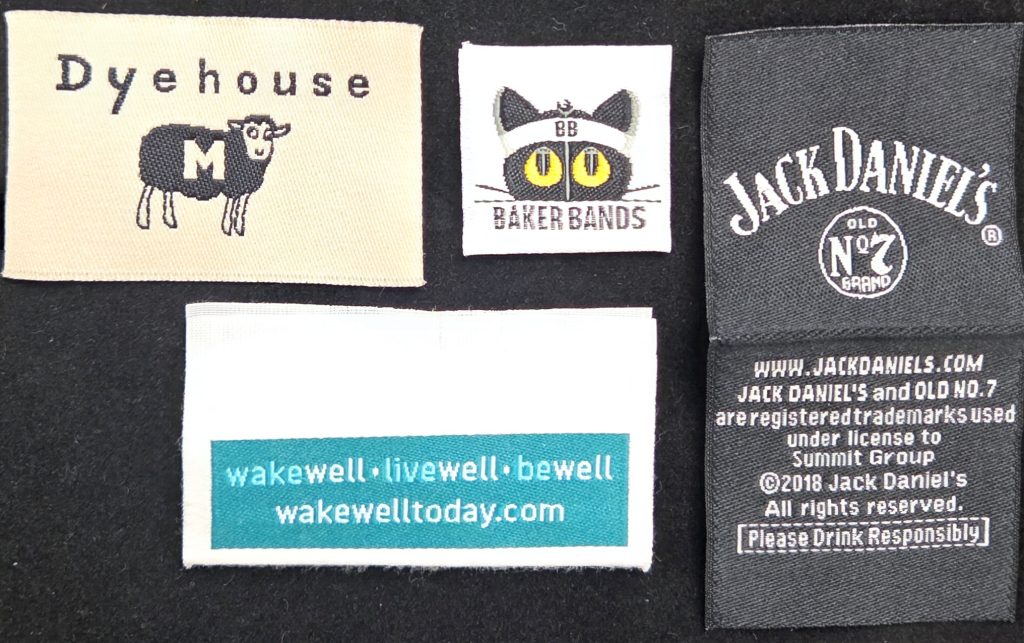
Woven Label Designs Examples:
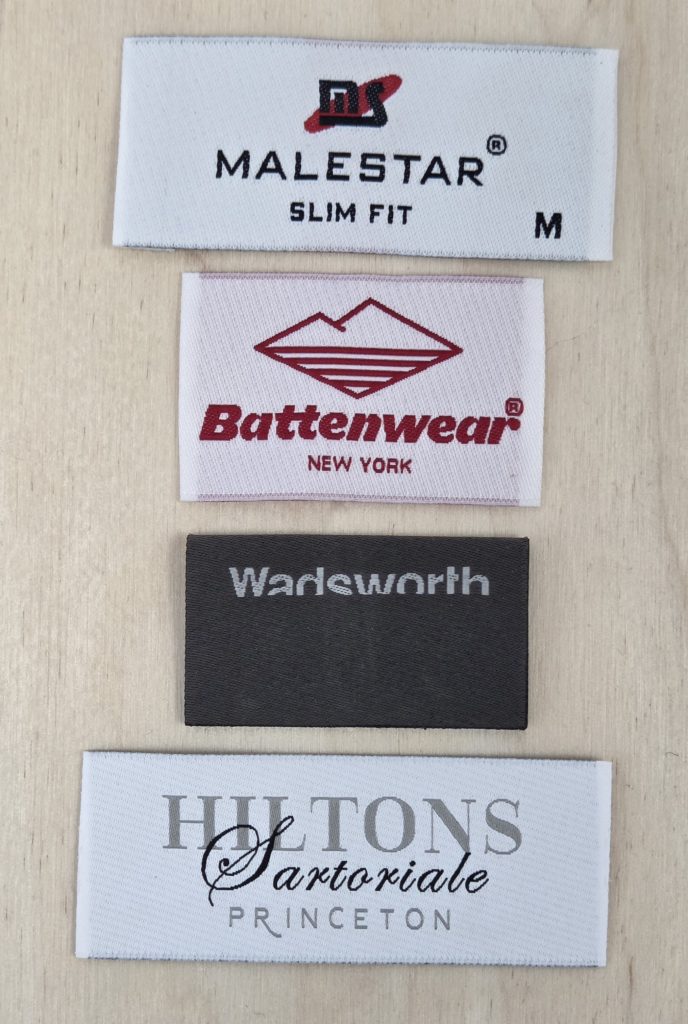
This set of woven label designs ↑ shows how different styles translate into fabric. Each approach creates a slightly different look depending on the brand’s identity and level of detail.
- Simple designs with clear structure are easy to read and produce consistently
- Bold, high-contrast graphics stand out and translate well into woven thread
- Minimalist labels create a clean, modern look with fewer elements
- More detailed or script-based designs require careful adjustment to maintain clarity
Woven Label Design: Step-by-Step Guide
Designing a woven label does not require advanced graphic design experience, but following a few practical steps will help ensure your label looks clean and professional once it is woven with thread.
Step 1: Start With Your Brand Logo
Most woven labels begin with a clothing brand’s logo or wordmark. If your logo includes extremely fine details or complex graphics, it may need to be simplified slightly so the design remains clear when woven into fabric.
Bold shapes, clear lettering, and balanced spacing typically translate best into woven labels.
Step 2: Simplify Small Details
Because woven labels are created using thread rather than ink, very thin lines or tiny decorative elements can become difficult to reproduce.
Simplifying overly complex graphics often produces a sharper and more recognizable label once it is woven.
Step 3: Choose a Limited Number of Colors
Each color used in a woven label requires a separate thread. While modern weaving machines can accommodate several colors, designs using two to five thread colors usually produce the cleanest and most balanced results.
Limiting the number of colors also helps maintain clarity and avoid visual clutter.
Step 4: Make Sure Text Is Easy to Read
Many clothing brands include additional information on woven labels such as a tagline, slogan, or location. When designing your label, make sure the text is large enough to remain readable once woven.
Small fonts and thin lettering can quickly become difficult to read when converted into thread.
Step 5: Export the Correct Artwork File
Once the design is complete, exporting the proper file format helps ensure accurate production.
Vector file formats such as AI, PDF, EPS, or SVG typically produce the best results because they allow the artwork to scale without losing clarity. Raster images such as JPG or PNG files may sometimes require adjustments before they are ready for weaving.
Providing the original design file whenever possible helps manufacturers reproduce the label accurately.
Why Woven Labels Are Popular for Clothing Brands
Woven labels are widely considered one of the most professional branding options available for clothing. Unlike printed labels, where ink is applied to fabric, woven labels are created by interlacing colored threads to form text and graphics.
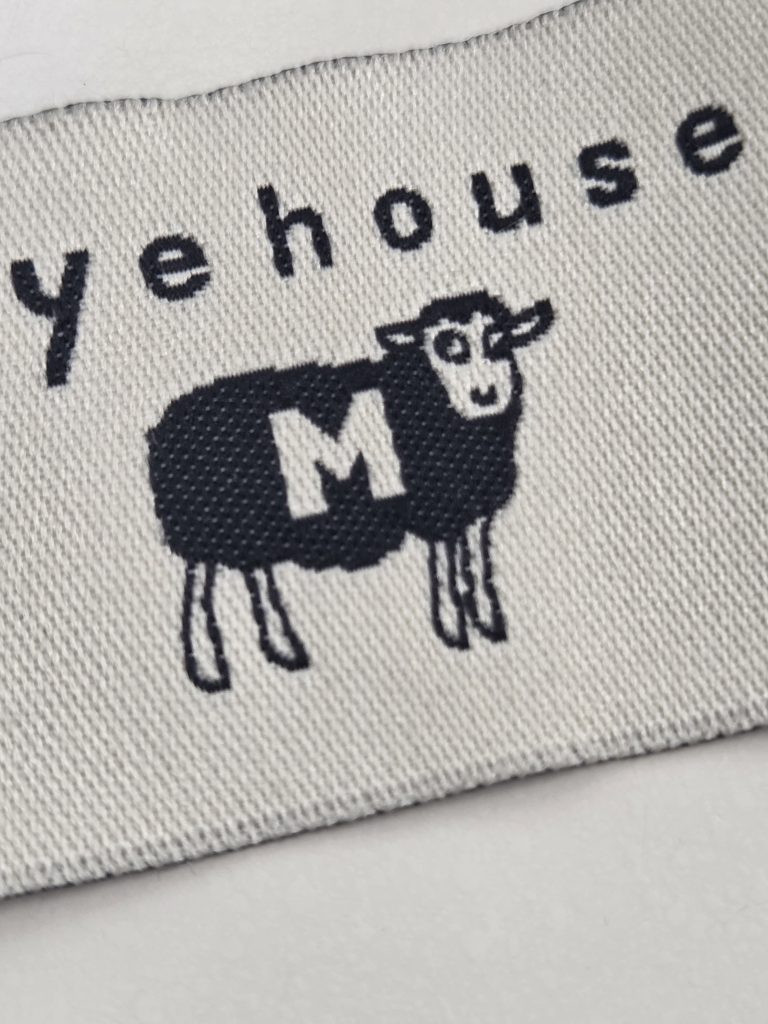
This weaving process provides several advantages:
excellent durability
long-lasting color that resists fading
a textured, premium appearance
crisp and detailed logos
Because of these qualities, woven labels are commonly used for:
fashion apparel
boutique clothing brands
denim and outerwear
premium accessories
handmade or artisan clothing lines
A well-executed woven label design can enhance the overall presentation of a garment while reinforcing brand identity.
Design Tools Clothing Brands Commonly Use
Clothing designers today create their branding using a wide range of digital tools. Professional designers often work in vector-based software, while many independent brands and startups rely on simpler design platforms or mobile apps. Designers creating logos for clothing brands often use professional tools such as Adobe Illustrator, which is widely used for vector-based artwork.
Common design tools include:
Adobe Illustrator
Canva
Procreate
Photoshop
Affinity Designer
These tools are excellent for developing brand artwork. However, when preparing artwork for woven labels, the most important factor is the file format used to export the design.
Vector artwork generally produces the best results for woven labels because it allows the design to scale without losing clarity.
Common Mistakes When Designing Woven Labels
Even experienced designers occasionally encounter problems when preparing artwork for woven labels. Many of these issues occur when designs created for digital use are applied directly to woven fabric. Many of these issues occur when woven label design does not account for the limitations of thread weaving.
Some of the most common mistakes include:
using extremely thin lines
including too many thread colors
adding overly intricate graphics
designing text that is too small to read clearly
Working with a label manufacturer early in the design process can help identify these issues before production begins.
Working With a Woven Label Manufacturer
When ordering custom woven labels, manufacturers typically review artwork and provide guidance on how the design will translate into fabric.
An experienced label supplier can help recommend:
the best weave style for your design
adjustments that improve readability
optimal label dimensions for your artwork
finishing methods that enhance durability
Collaborating during the design stage often leads to a more polished final result. Once your woven label design is finalized, the next step is deciding where the label should appear inside the garment. After finalizing your design, many clothing brands begin comparing suppliers. You can read our guide on where to buy custom woven labels for clothing brands to understand the different options available. Our Clothing Label Size and Placement Guide provides a quick visual reference for common label locations used by clothing brands.
Elevate Your Brand With Custom Woven Labels
For clothing brands, woven labels serve as a lasting signature stitched into every garment. A well-designed label not only identifies the brand but also reinforces the craftsmanship behind the product.
By understanding the fundamentals of woven label design, clothing designers can create labels that are durable, visually appealing, and aligned with their brand identity.
Whether launching a new clothing line or refining an established brand, investing time in the design of woven labels can make a meaningful difference in how your garments are perceived.
Frequently Asked Questions About Woven Label Design
What is the best file format for woven label artwork?
Vector file formats such as AI, EPS, or SVG are typically the best choice for woven label artwork. These formats allow the design to scale without losing clarity, which is important when converting artwork into thread patterns. Raster files like JPG or PNG can be used, but they may require adjustments before production.
How many colors can a woven label have?
Woven labels can include multiple colors, but most designs use between two and five thread colors for the best results. Using fewer colors often improves clarity and ensures the design remains clean and easy to read once woven.
Can I design a woven label in Canva?
Yes, many clothing brands start their designs in Canva or other beginner-friendly tools. However, it is best to export the final artwork as a high-resolution file or convert it into a vector format before production. This helps ensure the woven label appears sharp and accurate.
Why does my woven label design look different from my logo?
Woven labels are created using thread rather than ink, which means some design elements may need to be simplified. Fine details, very thin lines, or small text may not translate exactly as they appear digitally. Adjusting the design for weaving usually improves the final result.
What size should a woven clothing label be?
The ideal size of a woven label depends on the garment and the amount of detail in the design. Smaller labels require simpler artwork, while larger labels allow for more detail. Many clothing brands choose standard sizes that balance readability with garment placement.
If you’re ready to turn your logo into professionally produced woven clothing labels, the team at Rapid Tags can help. Our custom woven labels are crafted with precision weaving techniques to ensure your brand identity appears sharp, durable, and consistent across every garment. Feel free to stop by, call us at 1-877-438-8247 or email us at sales@rapidtags.com